
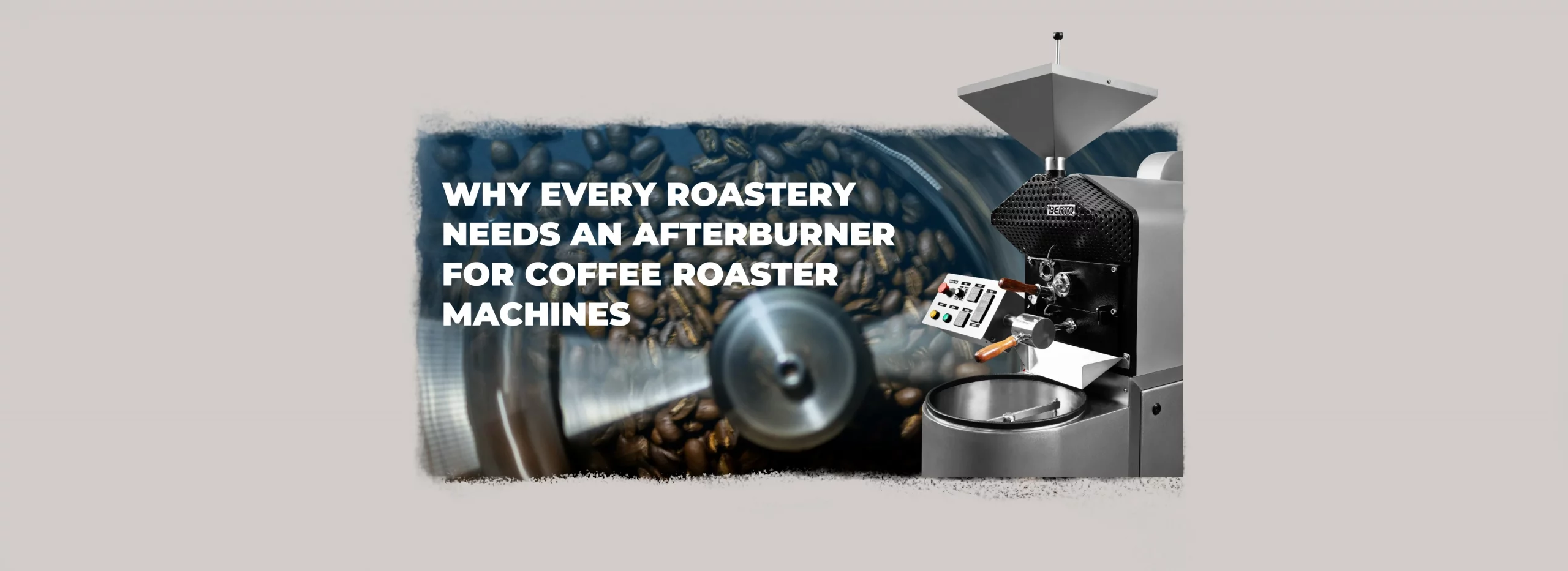
Why Every Roastery Needs an Afterburner for Coffee Roaster Machines
In coffee roasting, not every risk is visible. The process also releases smoke and fumes that may seem harmless at first but can have long-term effects on respiratory health, including serious conditions like popcorn lung. As awareness of these risks and commitment to sustainability grow, more roasteries are beginning to take emission control more seriously.
One common solution is using an afterburner in the coffee roasting machine, which helps break down harmful compounds before they are released into the air. In this article, we’ll take a closer look at how afterburners for coffee roasters work and the role they play in creating a more responsible roasting process.
How Afterburner for Coffee Roaster Works
The core principle behind an afterburner is secondary combustion, commonly known as thermal oxidation. Instead of releasing roasting exhaust gases directly into the air, the system redirects them into a dedicated high-temperature combustion chamber.
Inside this chamber, temperatures reach a high level to break down volatile organic compounds (VOCs), as well as smoke and odor-causing gases. These compounds are then oxidized into simpler, less harmful substances such as carbon dioxide (CO₂) and water. So, emissions become significantly cleaner, with reduced particulate matter and fewer harmful pollutants released into the atmosphere.
Main Components of an Afterburner
To get a clearer picture of how this works, here are the key components of an afterburner and how they support effective combustion and emission control:
- Burner
The burner is responsible for generating and maintaining the high temperatures needed to break down pollutants. - Exhaust Gas Intake/Inlet Duct:
This part channels the smoke and coffee chaff dust directly from the roasting machine chaff collector/cyclone into the combustion chamber. - Combustion Chamber
As the primary component of an afterburner, the chamber is designed to retain heat and provide sufficient residence time for exhaust gases to fully combust. - Exhaust Outlet (Chimney)
This is the final exit point, where treated air is released after pollutants have been reduced through combustion.
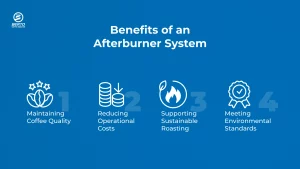
The Benefits of Integrating Afterburner
Besides reducing volatile compounds and improving coffee roasting safety, an afterburner for coffee roaster also brings a range of practical benefits, including:
- Maintaining Coffee Quality
Since an afterburner minimizes residual smoke and odor in the roastery environment, the coffee roasters can perceive aroma development better and maintain greater control over roast profiles. - Reducing Operational Costs
Cleaner exhaust from a coffee roasting machine means less residue building up in ducting and exhaust systems. This helps reduce the risk of blockages and minimizes the need for frequent manual cleaning. In some cases, using an afterburner can also lead to cost savings by reducing the need for more complex or oversized exhaust setups. - Supporting Sustainable Roasting
As coffee roasting continues to evolve, adopting sustainable and eco-friendly practices has become an essential part of responsible operations. Proper emission management is one of these important steps that helps create a cleaner, more efficient roasting environment while reducing the impact on the surrounding community. It reflects a roastery’s dedication to long-term responsibility and conscious business practices, strengthening professionalism and reinforcing trust with customers and business partners alike. - Meeting Environmental Standards
Air quality regulations in various regions require roasteries to manage the emissions they produce, especially when operating close to residential areas where odors can become a concern. Because of this, an afterburner for coffee roaster is often used as a solution to help meet environmental standards and prevent the risk of penalties or operational restrictions.
Different Types of Afterburners You Can Consider
Different types of afterburners are designed to suit varying operational needs, depending on factors such as roasting capacity and fuel consumption.
Traditional Afterburners (Thermal Afterburners)
Traditional afterburners operate at high temperatures to oxidize pollutants in exhaust gases, typically achieving removal efficiencies of over 95-99% for volatile organic compounds (VOCs) and odor-causing compounds. They are relatively simple in design and are known for their reliability and effectiveness. But the downside is higher fuel consumption because they operate at extremely high temperatures ranging from approximately 760°C to 870°C.
Catalytic Afterburners
Catalytic afterburners use a catalyst to operate at significantly lower temperatures, typically between 300°C and 400°C. This lower temperature requirement results in improved fuel efficiency and reduced energy consumption up to 60-85% compared to traditional afterburners. While they are relatively fuel-efficient, their performance depends on the condition of the catalyst, which may require periodic maintenance or even replacement.
Recuperative Afterburners
Recuperative afterburners have a unique working system as they not only oxidize pollutants but are also equipped with a heat recovery feature that captures thermal energy from exhaust gases and uses it to preheat incoming air. This makes them an ideal choice for large-scale roasteries that run continuous batch-to-batch processes, while still achieving high pollutant removal efficiency.
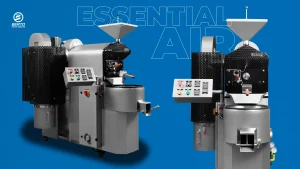
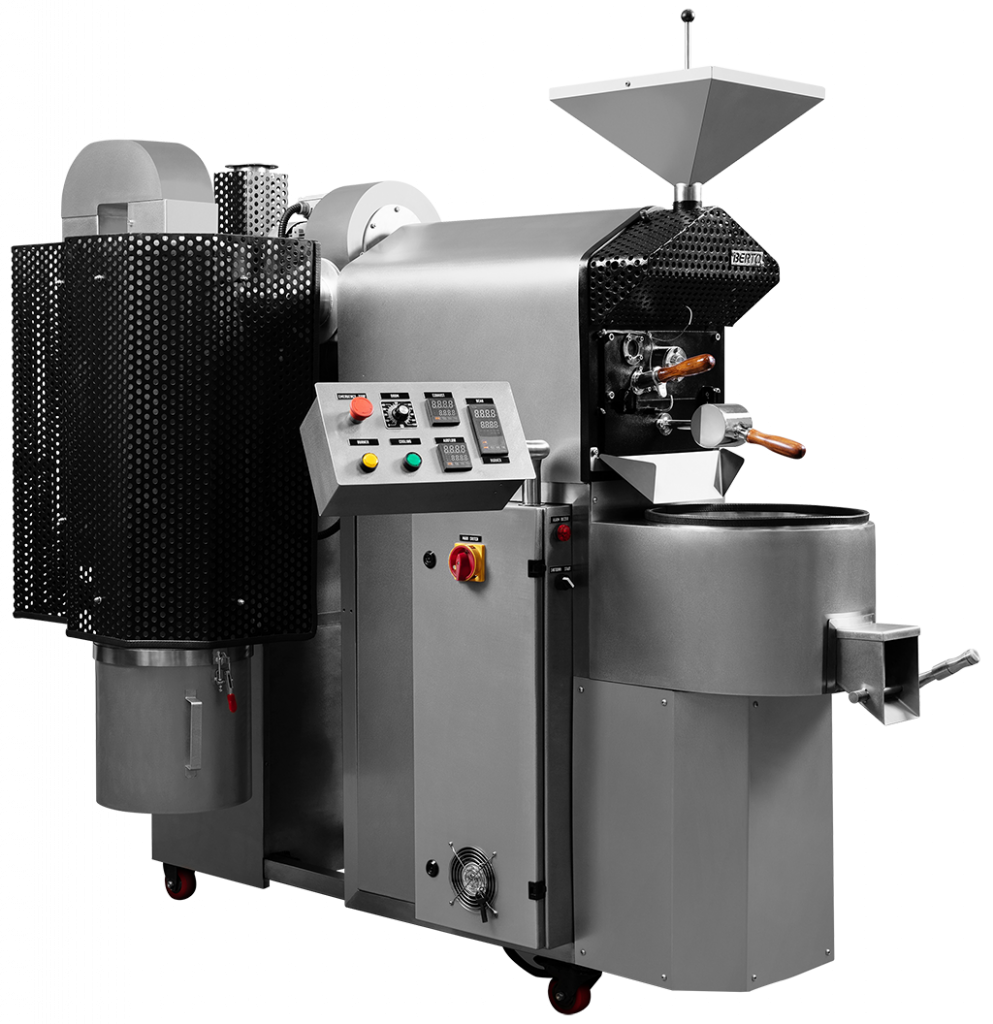
Berto Essential Air with Integrated Afterburner: Commitment to Safety and Sustainability
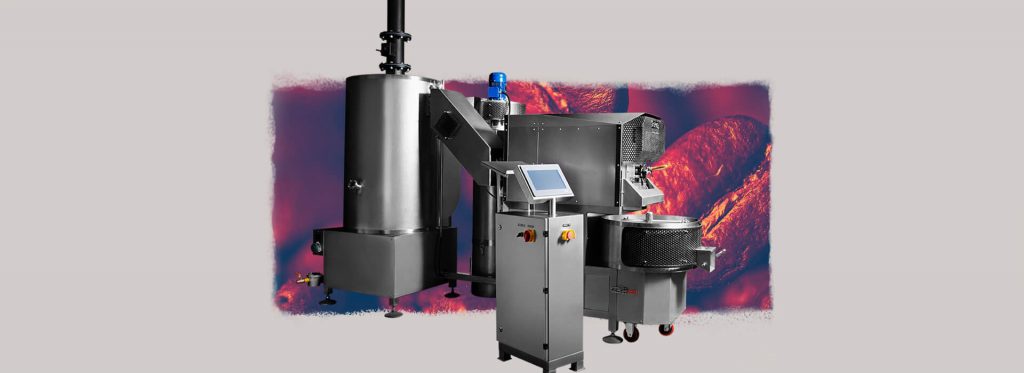
Berto Roaster is committed to supporting a safer and more sustainable roasting process, both for coffee roasters and the environments they operate in. This commitment is reflected in Berto Essential Air, which combines a hot air roasting method with an integrated afterburner to help reduce air pollution. The pure convective system supports a clean and consistent cup profile, while the built-in afterburner works to manage emissions throughout the roasting process. For roasting precision, the machine is built with BertoLogic™ that delivers unmatched accuracy from your very first batch.
With Berto Essential Air, managing emissions becomes part of your roasting process rather than something you have to deal with separately. Get in touch with our team today to experience a roasting process that focuses on quality and consistency, without compromising on environmental responsibility.
Related Roasters

Related Article
What is Coffee Chaff, and How Do You Manage It?



Related Article
How Can Coffee Roasters Be Sustainable?
Related Article
